The Artificial Glacier of Bubur: A Village That Didn’t Wait for a Miracle. It Built One.
Bubur, a village in Tehsil Puniyal, District Ghizer, has built an artificial glacier to secure its water supply for the years ahead. This is the story of why the village needed one, and how its own people made it happen.
The Problem After the Flood
In 2022, floods swept through Gilgit-Baltistan and left lasting damage across the region. In Bubur, the flood broke the village’s water channels, and water that should have reached the fields and homes was instead being wasted along the way. At the same time, the glacier that had always fed the village was shrinking — its ice level had visibly dropped. Less ice on the mountain meant less water in the stream, and for a village that depends on that water for irrigation and daily life, this was a serious problem.
The Village Decided to Act
Instead of waiting for the glacier to recover on its own, or waiting for outside help, the people of Bubur came together and made a decision as a community: they would build an artificial glacier.
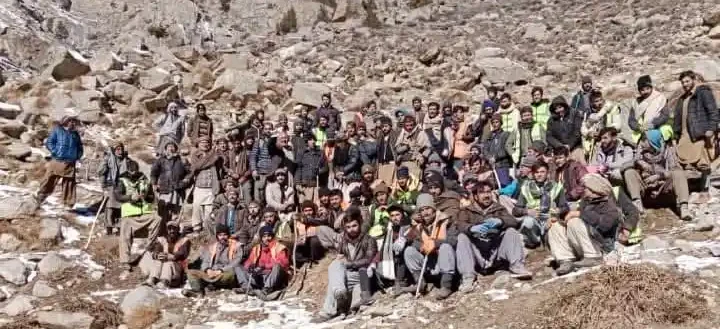
The project became known locally as the Glaf-II project. A team from the Geology Department of Karakoram International University (KIU) joined the effort, visiting a remote and difficult nullah above the village to identify the right site for the work. With support connected to UNDP and the ETI, the technical groundwork was laid — but the physical work of the project belonged to Bubur itself.
Carrying Ice, One Block at a Time
The site chosen for the artificial glacier sat at nearly 12,000 feet, in terrain too difficult and too high for any machinery to reach. So the youth of Bubur carried the ice up themselves — block by block, on their own backs, along a steep and demanding route up the mountain.
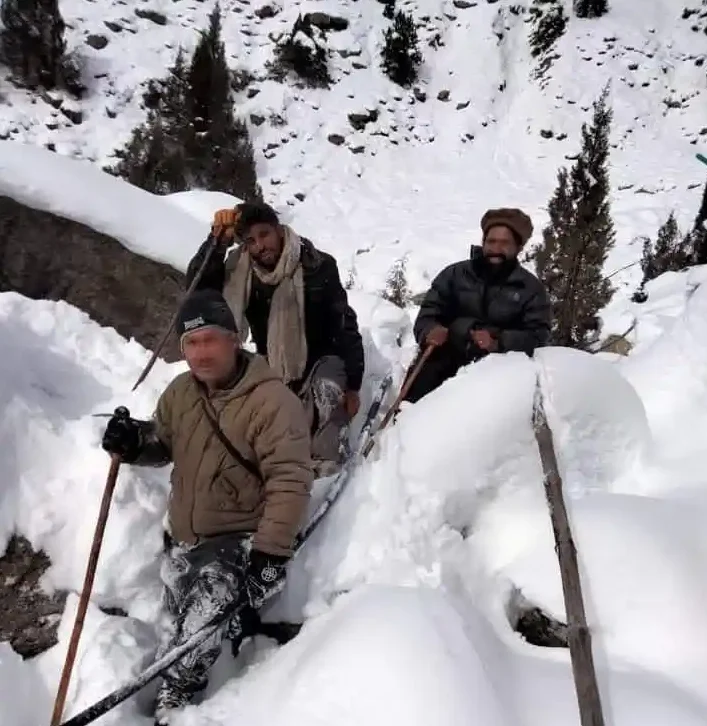
In total, more than 30 maunds of ice were carried up and stacked by hand at the site. It was hard, cold, physically demanding work, done by volunteers who gave their time and effort simply because they understood what it meant for their village.
What Happens Next
Ice stacked at that altitude, shielded from direct sunlight, doesn’t melt away quickly. Instead, it stays through the winter, and according to the experts involved in the project, it is expected to help a larger body of glacial ice build up naturally at the site over the coming years. As that ice grows, it should begin to melt on a steady, predictable cycle each year — sending more water down into the nullah and, in turn, into the village.
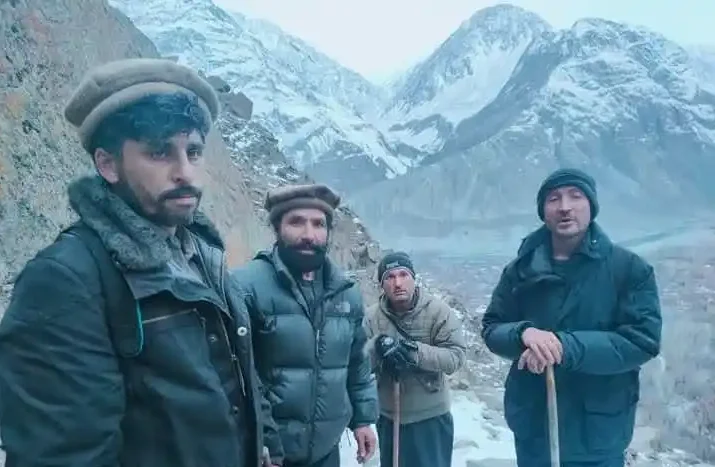
Once the pilot project in the nullah is complete, the expectation is a clear and welcome increase in the water reaching Bubur, easing the shortage that has affected the village since the flood.
A Village That Built Its Own Solution
What stands out about Bubur’s artificial glacier is not just the outcome, but how it came about. No one outside the village handed this solution to Bubur. The community looked at a real problem, made a collective decision, and then did the work required — carrying a mountain’s worth of ice by hand to nearly 12,000 feet because it was the surest way to secure water for the future.
The full results will take a few years to show, as the ice grows into a proper glacier. But the foundation is already there — placed by hand, by the people of Bubur, for the people of Bubur.